
Pool and Spa Water Testing
Professional Service
Properly balanced water is essential for comfort, safety and the longevity of your pool or spa. At Piscines René Pitre, our technicians perform a complete water analysis and provide you with a detailed report along with clear, easy-to-follow recommendations.
In-store, we systematically test the four key chemical parameters required to maintain healthy water:
- pH
- Total Alkalinity
- Calcium Hardness
- Cyanuric Acid (Stabilizer)
pH: The Foundation of Water Balance
pH is the most important parameter for swimmer comfort and sanitizer efficiency.
It measures how acidic or basic the water is.
Ideal Range: Between 7.2 and 7.8
- To increase pH: add pH+
- To lower pH: use pH-
Proper pH ensures soft, comfortable water, protects equipment and maximizes chlorine performance.
Alkalinity: pH Stability Control
Alkalinity acts as a buffer that prevents sudden pH fluctuations.
It is made up of carbonates, bicarbonates and hydroxides.
Ideal Range: Between 80 and 120 ppm
- Too low: unstable pH
- Too high: difficult pH adjustment
Adjustments:
- To increase: add Alkalinity Control
- To decrease: use muriatic acid
Calcium Hardness: Protecting Surfaces and Equipment
Calcium hardness represents the amount of dissolved calcium in the water.
Ideal Range: Between 200 and 240 ppm
- Too high: cloudy water, scaling, stains
- Too low: corrosion, foaming, deterioration of concrete or metal components
Adjustments:
- To increase: Calcium+
- To reduce: Sequa Sol or Control Cop
Cyanuric Acid: Chlorine Protection
Cyanuric acid acts like sunscreen for chlorine, reducing evaporation caused by UV exposure.
Recommended Level: Between 30 and 50 ppm
To increase stabilizer:
Add granular stabilizer or UV Defense sticks once or twice per season.
Key Chemicals and Usage Guidelines
Algaecide
Prevention and Treatment of Algae
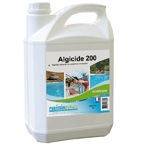
Algaecide prevents the formation and growth of algae.
Recommended Concentrations:
- Start-up or infestation: 40% or 60%
- Routine maintenance: 5% or 10% (40–60% may be used for stronger action)
Avoid:
- Pouring algaecide into the skimmer (can damage filter sand)
- Using it with a chlorinator or Duration tablets (possible chemical reaction)
Alum
Clearing Cloudy Water
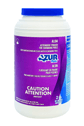
Alum acts as a flocculant, binding particles together and settling them at the bottom of the pool.
Guidelines:
- Use when pH is close to 8
- Vacuum afterward using Drain or Waste mode
- Recommended only for sand filters
- May temporarily unbalance water; use sparingly
Calcium
Increasing Water Hardness
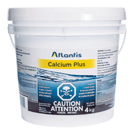
Calcium (calcium chloride) is used to help prevent corrosion.
Always dilute before adding.
Chlorine
Sanitizing and Purifying Water
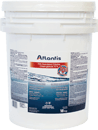
Chlorine eliminates bacteria, algae and fungi.
When dissolved, it forms hypochlorous acid, providing effective disinfection.
Available Forms:
- Granules
- Tablets
- Sticks
- Multiple formats to suit your needs
Conclusion: Clean, Clear and Safe Water
With our complete in-store water analysis, you receive:
- Accurate readings of your water parameters
- Personalized recommendations
- Professional advice for simple and effective maintenance
Your pool or spa deserves crystal-clear, perfectly balanced water. Piscines René Pitre is here to support you all season long.